

9 Best Gym Machines for Core Strength & Abs

The best gym machines for core strength are the cable machine, the Pilates reformer, the power tower (for hanging leg raises), the decline bench and the rowing machine. Each one loads your abs, obliques and lower back in a way bodyweight crunches can't, and all of them fit in a home gym. Below we cover what each machine does for your core, the exact exercises to do on it, and which models to look at.
Best Core Machines at a Glance
| Machine | Best for | Top core exercises |
|---|---|---|
| Cable machine / multi gym | Abs, obliques, anti-rotation | Cable crunch, woodchop, Pallof press |
| Pilates reformer | Deep core, posture, low impact | The hundred, knee stretches, plank |
| Power tower | Lower abs, grip | Hanging leg raise, knee raise |
| Decline bench | Upper and lower abs | Decline sit-up, reverse crunch |
| Rowing machine | Core endurance plus cardio | Steady-state rows, power intervals |
| Balance dome / Pilates ring | Stability, balance | Dome plank, dead bug, ring squeeze |
Shop by category: Multi gyms | Pilates reformers | Weight benches | Rowing machines | Pilates & yoga
The 9 Best Gym Machines for Core Strength
1. Cable Machine (Multi-Station Home Gym)

If you only buy one machine for your core, make it a cable machine. The cable keeps constant tension through the whole movement and you can add weight in small steps, so your abs keep getting stronger instead of plateauing like they do on floor crunches. Most multi-station home gyms include a high and low pulley, which is all you need.
Core exercises to try:
- Kneeling cable crunch: rope on the high pulley, crunch your ribs towards your hips. The best weighted ab exercise there is.
- Cable woodchop: rotate diagonally high-to-low (or low-to-high) to hit your obliques.
- Pallof press: stand side-on to the cable and press the handle straight out, resisting the pull. This trains anti-rotation.
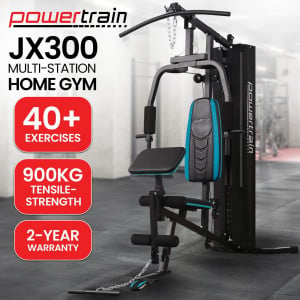 JX-300 Multi Station Home Gym (44kg stack)View product
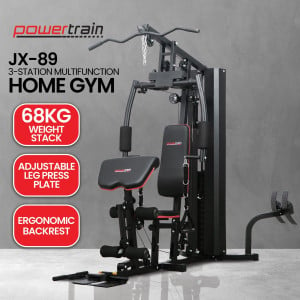 JX-89 Multi Station Home Gym (68kg stack)View product
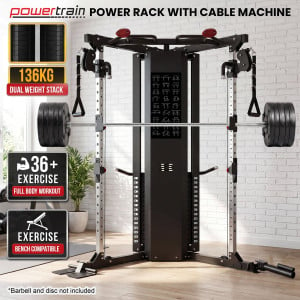 Functional Trainer Cable Crossover (136kg dual stack)View product
2. Pilates Reformer
A Pilates reformer is the closest thing to a dedicated core machine. The sliding carriage and springs mean many exercises challenge your deep abdominal muscles (the transverse abdominis) to help stabilise your spine. It's also low impact, so it can suit beginners and anyone who wants a stronger core without heavy lifting. Most home reformers fold away when you're done. Not sure whether to start on a reformer or a mat? See our reformer vs mat pilates guide.
Core exercises to try:
- The hundred: lying on the carriage with the straps in your hands and your legs at tabletop, pump your arms while holding a crunch.
- Knee stretches: kneeling on the carriage with your hands on the footbar, move it back and forth from your hips while your core keeps your back steady.
- Long stretch (moving plank): with your hands on the footbar and feet against the shoulder rests, hold a plank as you move the carriage back and forth.
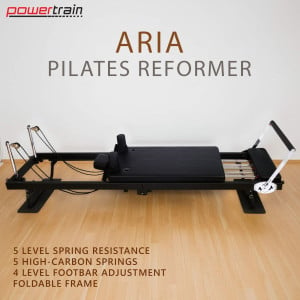 Aria Foldable Pilates ReformerView product
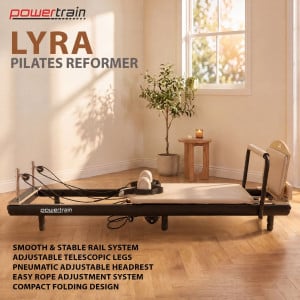 Lyra Foldable Pilates ReformerView product
 Selina Oak Pilates ReformerView product
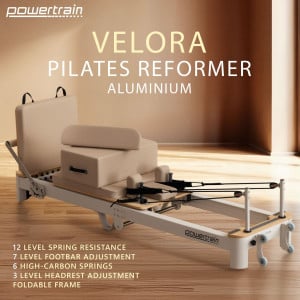 Velora Aluminium Pilates ReformerView product
3. Power Tower (Pull-Up and Dip Station)

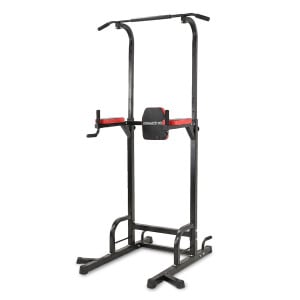
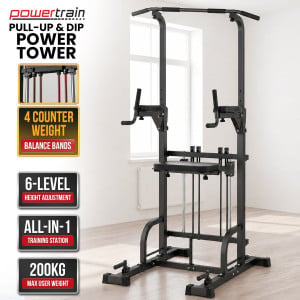
A power tower gives you two of the hardest lower-ab exercises there are. Hanging from the bar, or supporting yourself on the elbow pads (the "captain's chair" position), you lift your legs against gravity, which works your lower abs and hip flexors far harder than lying leg raises. You also get pull-ups, chin-ups and dips for your upper body.
Core exercises to try: hanging knee raises (start here), straight-leg hanging leg raises, and captain's chair knee raises with a twist for your obliques.
4. Decline Bench

Angling your body head-down makes every sit-up and crunch harder, because your abs work against gravity through a bigger range of motion. An adjustable flat/incline/decline bench also covers your chest and shoulder work, so it earns its floor space. Hold a weight plate or dumbbell on your chest once bodyweight reps get easy.
Core exercises to try: decline sit-ups, decline reverse crunches (grip behind your head and curl your hips up), and decline Russian twists.
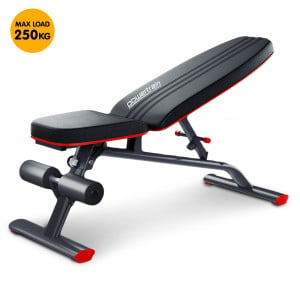 Adjustable Flat / Incline / Decline BenchView product
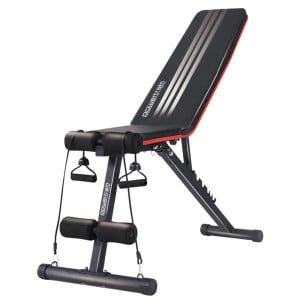 Incline / Decline Bench with Resistance BandsView product
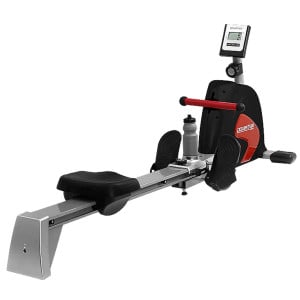
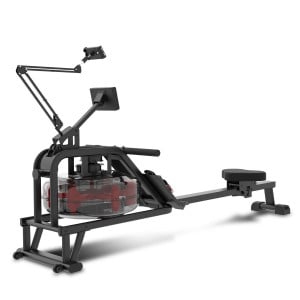
5. Rowing Machine

Rowing is the best cardio machine for your core. Every stroke links your legs and arms through your trunk, so your abs and lower back brace hard at the catch and finish. You get core endurance and a big calorie burn in the same session. Keep your back tall and drive with your legs first, not your arms. Not sure which type to get? Read our air vs magnetic vs water rower comparison.
6. Balance Dome and Pilates Ring

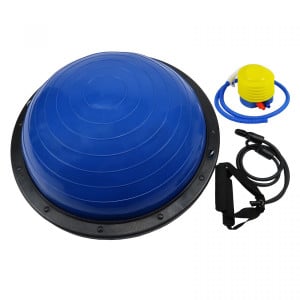
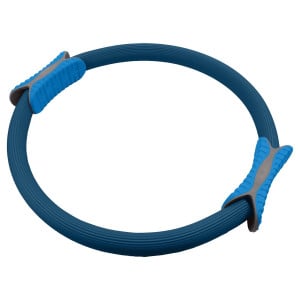
Unstable surfaces make your small stabilising muscles work overtime. A half-ball balance trainer turns planks, push-ups and squats into core exercises, and a Pilates ring adds resistance to floor work. Both are cheap, small and easy to add to any of the machines above.
Core exercises to try: plank with forearms on the dome, dead bugs on the dome, and seated ring squeezes into a roll-down.
7. Yoga Mat

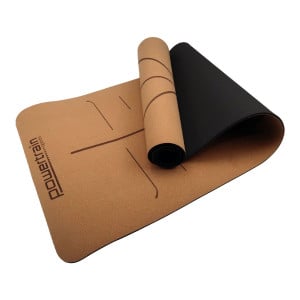
Not every core session needs a machine. A thick, non-slip yoga mat is the base for planks, side planks, bridges, dead bugs and bicycle crunches, and it protects your spine and floors when you add equipment. A 6–8mm mat is the sweet spot for core work.
Cardio Machines That Also Work Your Core
These won't build visible abs on their own, but they burn the calories that help reveal them, and done with good posture they keep your core switched on the whole session.
8. Elliptical Cross Trainer

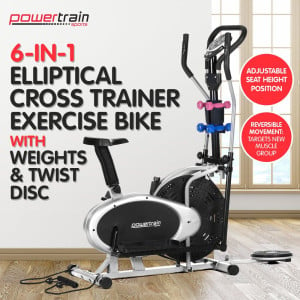
An elliptical is low impact on your knees and hips. To make it a core workout, let go of the handles for short intervals: your abs and back have to keep you balanced and upright. Some models add a twist disc for oblique work.
9. Treadmill

Running keeps your trunk and pelvis braced with every stride, and incline walking without holding the rails works your core and glutes even harder. A treadmill is the easiest way to do it year-round. Prefer to sit? Exercise bikes are the gentlest option, but they do the least for your core of any machine here.
What Are the Best Ab Machines?
If your goal is specifically stronger, more defined abs, the machines that let you add resistance win:
- Upper abs: kneeling cable crunches on a multi gym, and weighted decline sit-ups on a decline bench.
- Lower abs: hanging leg raises on a power tower, and decline reverse crunches.
- Obliques: cable woodchops and Russian twists.
- Deep core and posture: a Pilates reformer.
Single-purpose "ab gadgets" that only do one crunching movement tend to end up in the cupboard. A cable machine, bench or reformer trains your core and the rest of your body, so it keeps getting used.
Build a Core Setup at Home
- Starter: yoga mat, balance dome and Pilates ring. Covers planks, dead bugs and stability work for very little outlay.
- Step up: add a decline bench and a power tower to cover upper and lower abs with progressive overload.
- All-in: a multi-station home gym with cables for strength, or a Pilates reformer for low-impact core and posture work. Our multi-station home gym buying guide can help you choose.
Frequently Asked Questions
What gym machine is best for your core?
The cable machine is the most effective, because you can add resistance and train crunches, rotation and anti-rotation on one machine. A Pilates reformer is the best low-impact option for deep core strength and posture.
What gym equipment is best for abs?
A cable machine for kneeling cable crunches, a decline bench for weighted sit-ups and a power tower for hanging leg raises. Together they cover your upper abs, lower abs and obliques.
Which machine is best for losing belly fat?
No machine can burn fat from one spot. Fat loss comes from an overall calorie deficit, so the best machines are the ones that burn the most energy and that you'll use consistently: rowing machines, ellipticals and treadmills. Pair them with core strength work and a sensible diet to reveal the muscle underneath.
Can you train your core at home without a gym?
Yes. A yoga mat and balance dome cover the basics, and adding a decline bench, power tower, multi gym or Pilates reformer gives you plenty of options for core training at home.
How often should you train your core?
Two to four sessions a week is plenty for most people. Treat your abs like any other muscle: train them hard, then give them a day to recover.
The Bottom Line
For the strongest core, combine one resistance machine (a cable machine, decline bench or power tower) with one stability tool (a reformer or balance dome) and a cardio machine you enjoy. Explore our range of home gyms, Pilates reformers and cardio equipment to build your core setup at home.
You May Also Like: